Welcome to the Soccer Awareness Coaches Corner. Browse through soccer drills, small sided games, tactical thoughts, full sessions and a variety of resources. Posts marked “Training Center Exclusive” are for members only.

Youth Soccer Training & Development: Myelin & Training - The Scientific Concept in Skill Development
In this article, I explain the scientific background to the Soccer Awareness training method. A previous article introduced Awareness Training and explained how it helps players develop skills more rapidly than traditional training methods. In this article I want to explain the scientific background to Awareness Training and how the approach speeds up and improves decision making and the thought processes in soccer.
In this article, I explain the scientific background to the Soccer Awareness training method. A previous article introduced Awareness Training and explained how it helps players develop skills more rapidly than traditional training methods. In this article I want to explain the scientific background to Awareness Training and how the approach speeds up and improves decision making and the thought processes in soccer.
In my experience, there are three key ingredients for successful skill acquisition and development. They are:
Deep Practice
Ignition, and
Master Coaching
These three elements work together within your brain to create myelin. Myelin is the neural substance that adds vast amounts of speed and accuracy to your movement, thoughts and decisions.
What is Myelin and why is it important to skill development?
Inside the brain information is transmitted through neurons. Human skill is created by chains of nerve fibers carrying a tiny electrical impulse from the brain to the body through these neurons. Myelin is the insulation that wraps around the nerve fibers in our brains and increases signal strength, speed and accuracy. Myelin is produced by a person thinking about and analyzing skill situations themselves.
All human skills are created by linking the nerve fibers in your brain that send signals to your muscles. Myelin plays an important role by serving as an insulator for these nerve fibers. According to the U.S. National Library of Medicine and the National Institutes of Health, “The purpose of the myelin sheath is to allow impulses to transmit quickly and efficiently along the nerve cells” (NLM/NIH: MedlinePlus).
It has been shown that the more insulation – or more myelin – wrapped around those fibers, the stronger and faster the signal becomes as fewer of these electrical impulses leak out. Therefore, skill can now be redefined as “myelin insulation that wraps neural circuits and grows according to certain signals.” The two – skill development and myelin – are married together.
Myelin acts like an elastic band around the nerve fibers squeezing them and forcing the signal through faster. In football (soccer), with each repetition, myelin responds by wrapping layers around the nerve fibers, speeding up and improving decision making and thought processes. With each additional layer of myelin added, the player increases the ability to process the football specific skill required.
Everyone has myelin and everyone can improve themselves through its production. The more myelin produced; the thicker the sheath, the faster the message; the quicker thinking the player becomes.
How do the “three ingredients” work to help create myelin and improve performance?
Deep Practice
For his book Talent Code, Daniel Coyle searched out what he calls “hotbeds of talent” around the world, including a soccer field in São Paolo, Brazil. Through his research, he developed a theory of what he calls “Deep Practice” that helps produce amazing success. This means “training on the edge of your capabilities.” Training in this dynamic capacity leads to mistakes being made, which increases the speed of skill acquisition. Players learn through making errors/mistakes and then correcting them. This method produces results 10 times faster than regular practice.
As deep practice is occurring, the player is wrapping even more myelin around each circuit and increasing skill. Simply put: mistakes lead to better skill acquisition. Deep practice is most important for players 6 to 12 years old. Their spatial awareness and ability to understand tactical concepts is still developing and at its height, and they have an unlimited capacity to acquire and develop new motor skills.
Simply put: mistakes lead to better skill acquisition.
Repetition of themes in small sided games is crucial, and especially in the “sweet spot” on the edge of the comfort zone that produces errors but also teaches skills. This is where futsal comes in to play.


As Coyle explains in Talent Code, “Most Brazilian players learn their skills through futsal, the ssg equivalent of soccer. Futsal uses a half size and much heavier ball that doesn’t bounce; that promotes touch, technical and skill development. Sharp passing is paramount to have success. Futsal compresses essential skills into a small box, puts players into the ‘deep practice zone,’ making and correcting errors, constantly generating solutions to vivid problems. Players touching the ball 600% more often learn far faster, without realizing it, than they would in the vast expanse of the outdoor game.”
Deep practice needs to be on the edge of the players comfort zones, and maintained in game-related skill-developing situations.
Building myelin takes time, and putting ourselves in a position to fail actually helps fix our mistakes. Failing “better” and continuing this process until we accomplish the task is one of the quickest and most efficient ways to build myelin. We talk about letting players make their own decisions, allowing them to think for themselves – to problem solve; to self-correct. Myelin production does just that.
This learning process can boost the brain’s efficiency by increasing the speed with which a signal travels down the nerve fibers by up to 100 times. So think about it: if self-correcting could make signal transport over 100 times faster, why would you not want to help build this into a player’s mentality? By commanding the players, by telling them what to do, you are actually restricting this process from taking place.
Therefore, your players will actually think and react and make decisions more slowly and less efficiently because of this command style of coaching. Unfortunately, some coaches are still stuck in this old methodology of command coaching and it has to change. It doesn’t work.
What does this mean in terms of learning behavior?
Players should be encouraged to solve problems on their own, and not be told everything by the coach so they don’t have to think for themselves. By working through their own mistakes in practice, players train their minds to work faster and more efficiently.This is a scientifically proven fact. This will not happen if you continue to pursue the command style of coaching, where it is all about the coach and not about the player.
This is why we need to start this process at the youngest ages possible. There is a big responsibility to ensure that coaches for the youngest age groups begin this process of allowing the players self-correction, and at the most: only guide them to the right decisions.

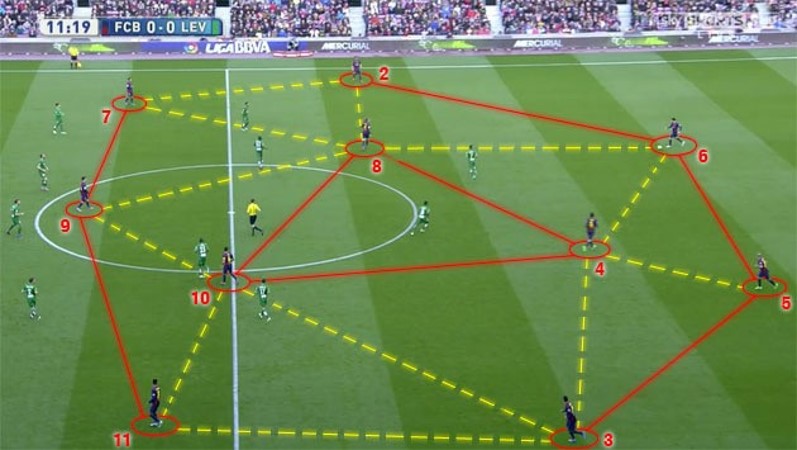
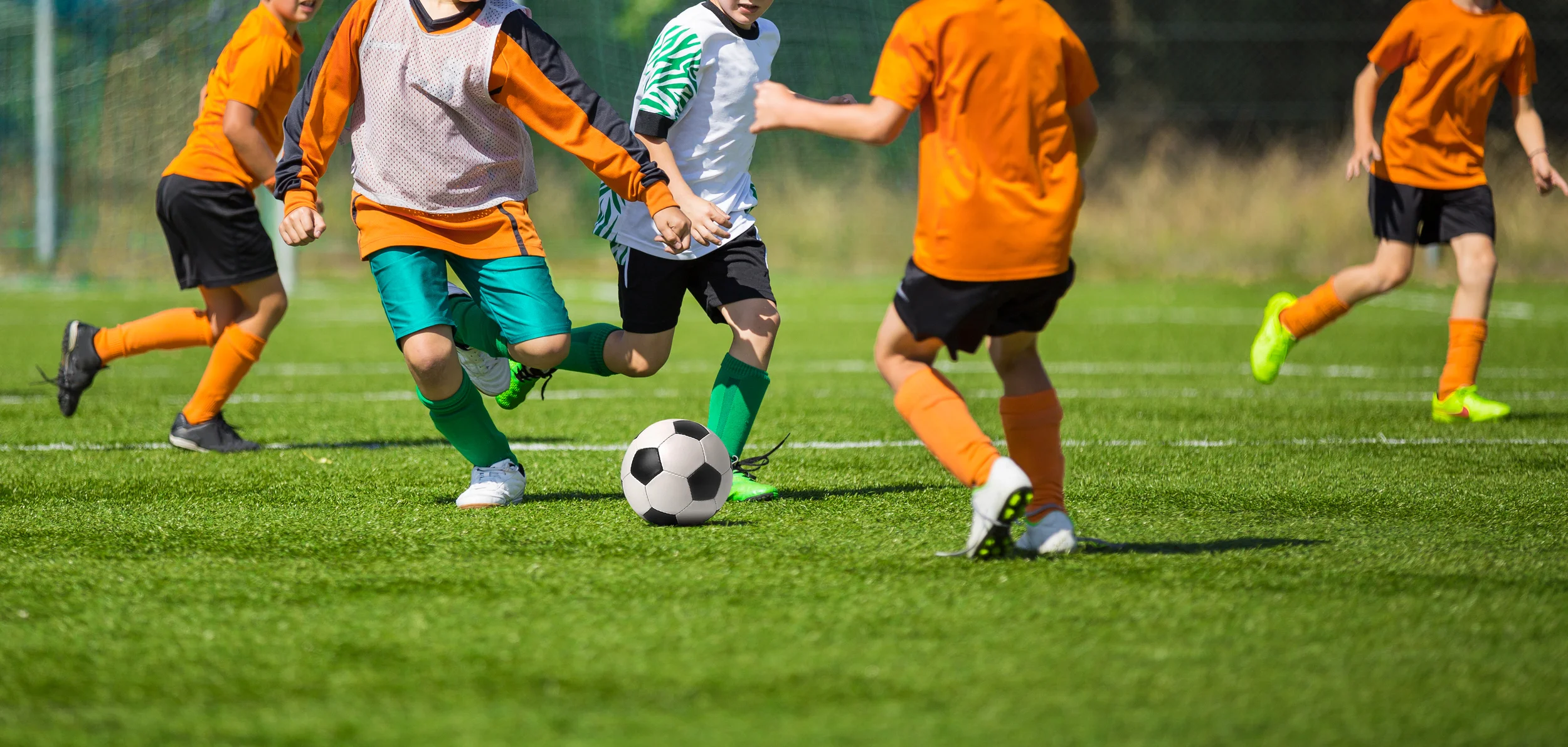



The secret is to develop specific practice to increase the layers of myelin to add more skill and speed. The thicker the myelin gets, the better it insulates and the faster and more accurate our movements and thoughts become.
What is specific practice? An example would be practicing the same theme over and over, initially as a technique and then as a skill. This could be one-touch passing, first in isolation as a technique and second in a game situation as a skill (when and where to pass).
They say that for a person to become an expert at something they need to do a minimum of 10,000 hours of practice. This means that deep practice times 10,000 hours should produce world-class skills. This is the ten year/ten thousand hours rule. There are no guarantees for this, of course, but this is the kind of minimum effort required to achieve these results.
Simply put, the rules of deep practice are: try again, fail again; try better, fail better; keep trying, succeed. In other words, coaches need to allow players to fail/make mistakes and learn from them in practice.
Ignition
Deep practice is a cool conscious act; ignition is a hot, mysterious burst – an awakening.
Ignition is the motivational fuel that generates the energy, passion and commitment of a person from within to perform deep practice. It is intrinsic motivation where the athlete has a self-willed drive to succeed. This is the catalyst, and it represents a huge level of commitment that can be borne out of a player’s deepest, often unconscious, desires to succeed.
A person’s motivation is not just intrinsic; it can also be ignited by an event in the outside world, such as being inspired to play for your country after watching the skills of the World Cup Champions. In a famous example, Roger Bannister broke the seemingly-impossible four-minute mile in 1954. This ignited everyone’s belief to go for it, and within three years, seventeen athletes had broken what was previously considered a physiologically impossible feat.
An athlete can also be ignited or inspired beyond the intrinsic by Master Coaches.
Master Coaches
Master Coaches are the final piece in the “jigsaw of success,” and can have an immense amount of positive influence on the player. These coaches create a learning environment where the players are actively engaged and are led by guided discovery methods of coaching. Training should be player centered not coach centered, where coaches only need to step in at the appropriate moments to make corrections.
Real master coaches are like farmers; they are deliberate cultivators of myelin. They are talent whisperers, and can be the difference between success and failure for athletes.
The drawbacks of poor training at young ages: Myelin does not unwrap, it only wraps. And somyelin is the reason bad habits can be difficult to break in older players. This is why developmental training is so important, where skill development is the focus. We must help players develop good habits that stay with them, because the bad habits equally stay with them if developed at a young age. The ages of 6 to 12 are the most important in the training of players and can affect their success in the future.
In summary
The game of soccer is dynamic; situations change and new decisions have to be made every second. Players are continuously making and correcting errors and constantly generating solutions to ongoing problems. To be successful, players must be skilled at decision making, and to be skilled they need to be properly trained.
This training occurs in deep practice. The more you practice “on the edge,” the more decision making situations you find yourself in. The more decision making situations you are in, the more thought it takes to solve them. The more this all happens, the more myelin is grown, the faster the body and brain processes situations and the better the decisions are made.
So, to recap; myelin is the insulation that wraps these nerve fibers and increases signal strength, speed, and accuracy. The more we fire a particular skill circuit (it could be when and where to pass, for example), the more myelin is produced to activate and stimulate that circuit and the stronger, faster and more fluent our movements and thoughts become.
The three key ingredients for skill acquisition and development are Deep Practice (with specific practice), Ignition and Master coaching. These are required to help build the myelin wrap, which helps to speed up, strengthen and improve the accuracy of decision making. All three must be present to facilitate the maximum growth of myelin production and subsequent skill development.
In simple terms
The more Myelin the person produces the faster, stronger and more accurate the messages are from the brain.
Deep Practice ensures myelin is produced.
Ignition is the process that serves as the motivation for deep practice. Ignition supplies the energy, and deep practice translates that energy over time into forward progress (increasing the wraps of myelin). Ignition is caused by the inside energy of the person (desire, self-belief) and the outside energy of the coach or outside events. Words are the signal most used to trigger ignition.
Master Coaches use the words that trigger ignition, which in turn motivates the deep practice that produces the myelin that speeds up and strengthens the decision making signals in the brain of the player. So, the types of words used can influence the player greatly. Negative words can have as much bad influence; as positive words have good influence. Coaches should take note of this important statement.
So, working backwards, the formula is: Master coaching creates Ignition, which encourages Deep Practice. Deep Practice – and especially specific practice – enhances myelin production, which produces improvements in accuracy and speed of decision making.
In conclusion
My method of coaching is, as you see, all about inspiring the players to think and make decisions for themselves. We need to encourage them to self-determine “where, when, how and why” they need to play a particular way or make a particular decision in a particular situation.
It is encouraging, to say the least, that I have discovered this wonderful work – Talent Code by Daniel Coyle – which supports my work. This book proves scientifically that the way to develop players is to empower them and to give them the reins of thought.
The key is becoming a Master Coach. The Master Coach guides players and steers their path towards greatness. He applies his knowledge and experience to use the “less is more” approach in the right contexts of development. In a way he, is showing them without showing them, guiding them to the light at the end of the tunnel – without showing it directly – until the players themselves find and see it and go through it.
So please, let the players learn for themselves. With guided deep practice and appropriate ignition by master coaches, over time players will develop far better than coaches commanding and demanding and not allowing players to think for themselves.

Quick Transition Directional Play Promoting Passing and Movement Off the Ball
This session improves quick decision making, tight control because the spaces are small to play in, and thinking in advance due to the switch in direction of the play. You can also work on the defending players.
The following session is an excerpt from “Soccer Awareness Coaching Curriculums presented by Game Sizes: 4 v 4, 7 v 7, 9 v 9 through to 11 v 11”
This eBook covers up to 14 weeks of training for each game size presented as one session per week. All sessions have small sided games scrimmage set ups as close as we can get it to finish to reflect the theme of the session
As the program moves from 4 v 4 through to 11 v 11 the focus changes from individual teachings at 4 v 4, to small sided situations at 7 v 7, to Phases of play and tactical needs at 9 v 9; through to team tactical development at 11 v 11. 11 v 11 focuses on advanced training ideas to teach the “team”.

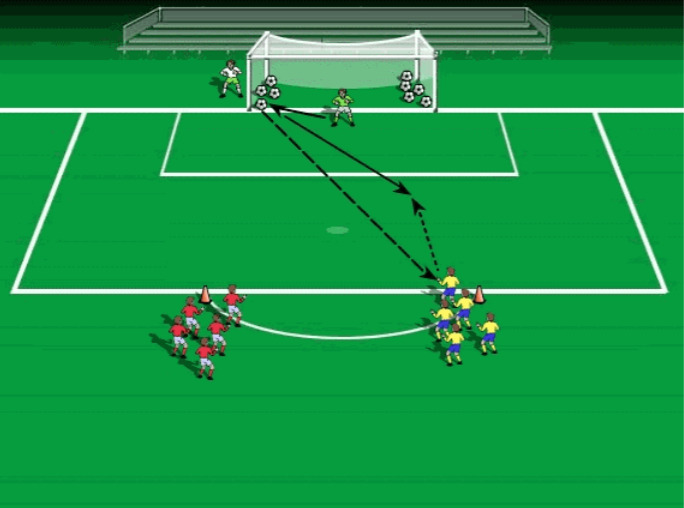
Quick continuous attacking play which is good for anaerobic fitness. Here the players are breaking one way passing to an outside player and switching positions, inside player out, outside player in then attack the other side of the zone.
Coaching Points:
Technical ability on the ball in 1 v 1 situations.
Quick Transition in attack - As the transition between players happens for example (3) changes with (5), the numbers team must get the ball to (4) as quickly as possible.
Observe the movement of (1), (2) and (6) in terms of their support positions as the directional change takes place, they must move in anticipation to find space to help the player on the ball as the switch occurs.
Observe also, as the change occurs, the positions of the defending team; has the decision been made quickly enough who presses the ball. Are the other defensive players supporting and covering and especially tracking runners off the ball. The coach must learn to look away from the ball and observe what may happen next before it happens.
This session improves quick decision making, tight control because the spaces are small to play in, and thinking in advance due to the switch in direction of the play. You can also work on the defending players.

Here (3) passes to (5) and (3) leaves the area. As the ball is traveling to (5), (1), (2) and (6) must get into a position to help (5) as early as possible so in theory, (5) can make a one touch pass to any or all of them. Thus (5) already has three options of a pass.
Their movement is OFF THE BALL and away from their markers.
Of course the defenders will move to compensate but for the sake of what I am trying to show it is easier to get the point across by showing the movements of the attacking team only.
The attacking players in the actual practice may get free like this anyway if they time it correctly.

The attacking players each being free to help (5) by being open for a pass.
(5) May elect to run with the ball but at least three are three options available for a pass if needed.
(5) May even elect to play a long pass straight to (4) on the other side of the field if the pressure from the closest defender is not fast enough. You may then ask the closest player (in this case player 2), not necessarily the passing player (5) to be the switching player instead if (5) passes it directly to (4).
You could even then work on defending in this game though focus on defending totally in the session or attacking totally in the session it is better not to try to do both as it can be confusing for the players.
Progression:
If a player beats an opponent in a 1 v 1 situation the team gets an extra point or goal each time.
Play one and two touch; reward each successful one touch pass with a goal to encourage the players to play quickly.
Competitive: Ensure you keep the score and have a finishing score to achieve as this keeps the players focused and motivated to win.


Abu Dhabi Sports Council Academy Evaluation By Marco Monte of Inter Milan
Marco Monte of Inter Milan (one of the top 5 professional clubs in the world) was the Consultant for the Abu Dhabi Sports Council and he assessed all professional clubs in the UAE. This includes his quotes about the Al Ain professional youth academy Directed by Wayne Harrison.
Marco Monte of Inter Milan (one of the top 5 professional clubs in the world) was the Consultant for the Abu Dhabi Sports Council and he assessed all professional clubs in the UAE:
His quotes about the Al Ain professional youth academy Directed by Wayne Harrison were:

- “The consultant has noticed that the Al Ain club management has decided to invest the time and resources required to create an important group of coaches.
- They are well managed and organized by an excellent Director of Coaching Wayne Harrison whose objective is to improve work on the pitch as well as to help the boys develop and grow without the anxiety of achieving results.
- The consultant is absolutely certain that the Al Ain club represents the model and Philosophy of youth football that can be the beacon for the other Emirati professional clubs. The consultant is of the opinion
- The clubs current status with respect to technical affairs can be stated as the one closest to the standards of the best European professional clubs”. Report written in 2011.
- Given this; we were still able to perform successfully from a results standpoint also. Al Ain Youth teams were the MOST successful in the UAE winning 7 National Professional youth titles at various ages using the Soccer Awareness Philosophy of teaching.
- Thirteen players promoted to the first team from the academy 2009-2011
- Wayne Harrison Created and presented In – House Coach Education and development courses December 2010 and February 2011 to help prepare all the 42 full time academy coaches he was in charge of for their Asian Federation B Licensing course.
- Wayne Harrison Represented the Abu Dhabi Sports Council as a delegate in Tokyo; Japan at the Japanese F.A to compare the youth development models of each respective country, quite an honour to be chosen to do so. He wrote a paper on this for the Abu Dhabi Sports Council.
- To assess the level of play Al Ain under Waynes Professional guidance beat Inter Milan, Valencia, Atletico Madrid; Manchester United and Raja the top club in Morocco in tournaments at U15 and U16 age groups.
- Wayne has had many documented successes in youth development and is well respected in the football world due to this.
- With this in mind everyone should consider embracing Soccer Awareness Training for their children, more and more Internationally this concept of the game is showing it is invaluable to educate players in its philosophy and at every level of the game and the younger players start the better chance they have of success.

Patterns of Play: Building from the Back in an 8 v 8
8 v 8 is at the younger ages; and not wanting to baffle them with science too early; we will choose far fewer ways to build out from the back than we do at 11 v 11.
But we will establish patterns of play they can learn to do that are very simple; but also very effective when done correctly; and we will change the boot ball mentality many clubs follow; and teach the game correctly without fear of failure.
Please watch your games and ask yourself:
- How many times does your team try to build out of the back?
- How many times do they play Boot-Ball from back to front?
8 v 8 is at the younger ages; and not wanting to baffle them with science too early; we will choose far fewer ways to build out from the back than we do at 11 v 11.
But we will establish patterns of play they can learn to do that are very simple; but also very effective when done correctly; and we will change the boot ball mentality many clubs follow; and teach the game correctly without fear of failure.
Mistakes will occur when we build from the back because we are taking risks, but that's okay, players will learn from them.
Yes, it's much safer to boot it long to the fast striker to run and score but that teaches exactly nothing for the long term development of our players; plus all that the midfielders and defenders get out of are stiff necks from watching the ball go over their heads from back to front.
The striker gets all the glory but it means nothing; and as they get older; long term the one who suffers the most is ultimately the striker who learnt absolutely nothing but "running fast or dribbling in a straight line."
As the players get older, defenders are faster, stronger and more cleaver. The fast dynamic striker is no more. So let's teach the game correctly now; for everyone to succeed. I want EVERY player to learn, improve and succeed. That includes the striker as much as anyone. Good strikers are worth their weight in gold but they have to be trained correctly like everyone else.
Distribution from the Keeper and Playing from the Back

Perhaps use cones instead of actual players to practice in a shadow play to make it work initially and to gain confidence (better still use Mannequins). Or, if we are beyond needing to do shadow plays we can start with an overload for us to train to pass out from the back so we have initial success. As we improve we can make it an 8 v 8 and an actual game situation. Here we start with an 8 v 5. We are not saying these will work all the time. Sometimes we will get them wrong. Sometimes the opponents will work out what we are doing and stop us. And sometimes it will work great.
Developing Play from the Back in an 8 v 8 through the Centerbacks / Wingbacks

Now (4) breaks wide to receive the ball and escape being marked in the middle. The same can happen with (5) breaking out to the right also with (6) who stays central.
We must ALWAYS try first of all to play out from the back. The ABSOLUTE last resort is for the keeper to kick it long. This is Great preparation for playing the 11 v 11 and developing the game from the back. Players must spread touchline wide both sides to offer up the largest spaces to play in as they can. Keeper has 3 choices here and the ball must be passed on the ground for ease of reception.
Distribution from the Keeper thru Wide Midfielders/ Strikers

They push 3 up we get out through our wide strikers. Have opponents make different choices to force the keeper to make relevant decisions in training. Here we would NOT try to develop play through the back three players as each one is marked. Therefore we go to the next line of attack to get out.
Rotation of Wide Players to get Free

Here is a simple rotation between (3) and (4) which opens up a passing lane for (3). Opponent (D) follows our (4). If (D) stays then we don't pass to (3) but rather try something else. Introducing 2 player rotations like this is important as we can eventually make this happen all over the field of play. The sooner they learn this the sooner it is embedded in their soccer DNA.

This 54 page eBook combines striker training with small-sided games into eight full training sessions, each with coaching points, multiple progressions and developments.
Striker movement is one of the greatest and most difficult ARTS to master. The situation is constantly changing and the striker is constantly moving to create space for him or herself but also for teammates.
Small-sided games are important in the development of younger players through increased touches with the ball and more experience with basic tactical challenges.
Rotation of Wide Players to get Free

Here a simple rotation between (3) and (4) opens up a passing lane for (3). Opponent (D) stays in the space (3) runs in to, so perhaps (4) can get free? Introducing 2 player rotations like this is important as we can eventually make this happen all over the field of play. The sooner they learn this the sooner it is embedded in their soccer DNA.
Distribution from the Keeper through a Central Midfielder Rotation

They push 3 up we get out through a rotation with (6) and (10). Have opponents make different choices to force the keeper to make relevant decisions in training. (6) Sprints forward and takes his or her marker with them, in this case (B). This opens up space where (6) originally was for (10) to drop in unopposed to be free to start the play. In this if we do it quickly enough (10)’s marker may not see it in time and (10) will get free.
Inverted Runs Inside by Wide Midfielders/Strikers

They push 3 up we get out through our wide strikers. Have opponents make different choices to force the keeper to make relevant decisions in training. Here we would NOT try to develop play through the back three players as each one is marked. Therefore we go to the next line of attack to get out. Build up to 8 v 8.

Switching the Point of Attack
Here we show how to overload one side of the field to leave the other side open to catch opponents with a very fast switch of play. Rather than player rotation; this is BALL rotation and retention.
Soccer Awareness has partnered with Edufii to provide unlimited access to Wayne Harrison's Soccer Awareness systems, in a private mobile TrainingSpace, where Wayne will share his training processes, answer your questions and collaborate with other coaches at all levels.
Wayne's system helps develop world class youth soccer players and teams in a systematic and imaginative manner that guarantees performance at the highest level of competition.
JOIN OUR TEAM
Here we show how to overload one side of the field to leave the other side open to catch opponents with a very fast switch of play. Rather than player rotation; this is BALL rotation and retention.
Attacking Setup

Start positions for the attack players forming big spaces between each other to open up passing lanes. We get as BIG as possible. We will next begin to overload one side of the field and make it the strong side.
Drawing Defenders Towards the Ball

We play (11) in wide but keep players on the weak side of the field wide and open. We want to draw the opponents towards the ball with our initial movements of players close to the ball and drawing them away from the WEAK side. Now here you see (2) and (7) almost forgotten and on the BLIND / WEAK SIDE of play.
Switching the Point of Attack

Now we play two very fast passes to change the point of attack and we see (8) getting involved also on the blind / weak side of the field catching the opponents off guard.
Being Patient to Create the Switch

We may even keep the ball there for a few passes to draw them in even more and being patient and showing no interest for the other side of the field. Then we hit them hard with the fast switch of play and we have 3 players in wide open space to attack the goal.
Now Showing Defenders Obvious Recovery Runs for Clarity

Now (2) overlaps (7) to get into a crossing position and in the meantime as the switch is happening (8), (9), (10) and (11) get in finishing positions in and around the box. (6) ready to drop back in should the opponents win the ball and counter attack.

The Tiffiny League and Wayne Harrison
We currently have two Soccer Awareness teams, 2002s and 2005s, playing in the competitive Tiffiny league in Vista and will be building upon that for the upcoming Spring league when many clubs are in their down time.
Both teams have signed up again already within 3 days of advertising for the Spring League showing the success of this (starting March 6th, through June 14th; 14 games and 14 training nights), we would like more teams to participate with us and discover the benefits of the Soccer Awareness training model.
- We currently have two Soccer Awareness teams, 2002s and 2005s, playing in the competitive Tiffiny league in Vista and will be building upon that for the upcoming Spring league when many clubs are in their down time.
- Both teams have signed up again already within 3 days of advertising for the Spring League showing the success of this (starting March 6th, through June 14th; 14 games and 14 training nights), we would like more teams to participate with us and discover the benefits of the Soccer Awareness training model.
- You can stay at your clubs but still play for us and experience more educational game and training situations; nothing is affected by it.
- It supplements the work your clubs do with your children.
- Both Boys and Girls teams catered for and some mixed where appropriate.

Yes we want to develop winners too, but we want to teach THE RIGHT PHILOSOPHIES ABOUT THE GAME FIRST, and winning the Right Way is a consequence of it over a period of patience and time.
PLEASE INQUIRE THROUGH Maryharrison67@hotmail.com about the Tiffiny league and how you sign up your son or daughter.
What do you get from playing the Tiffiny league and Soccer Awareness training?
A focus on the "Pure Development" of players; no pressure to win; though still encouraged to play in a very competitive environment; with mistakes used solely as "building blocks and support" for personal improvement as individuals and team players and not used as negative criticism or viewed as forms of failure, rather as forms of positive learning.
- Coaching by Wayne Harrison: UEFA "A" license coach since 1996; Degree educated in Sports Psychology, Ex-Professional player and Professional Head coach at Youth and Senior level.
- Both Game day coaching and training time development by Wayne himself, hands on teaching.
- Thirty years of coaching and educational experience including Wayne's greatest achievement to date; Developing a Coaching and Player Training and Educational Academy program that resulted in his youth teams at Al Ain and at Professional Level in the United Arab Emirates; winning 7 National Championships at various ages over his time in charge as the DOC and with several 2nd place finishes in that time period also.
- A wealth of knowledge available through Wayne's 14 published Coaching books; 32 E Coaching Books and numerous videos presented by him on the game at the highest levels of it.
- A proven and factual track record of success by Wayne in the soccer development of players and teams alike.
- Most of all: Its REALLY FUN and the players LOVE IT; as do the Parents.
- Great Fun, Stress Free; Positive, Educational, Developmental, Patient; Supportive, Encouraging, Engaging; Open minded; Detail focused; AND PROVEN success from the Soccer Awareness methods of teaching.
What will you SEE at the Tiffiny league games?

- Sorry, no focus on Winning for the sake of, but teaching winning the RIGHT WAY over time; even if we concede a goal or two because of trying to teach correctly.
- Modern day tactical play from the professional game embraced by the coach and taught to the players
- Building play from the keeper through the back players and advancing up the field this way, with encouragement to try things and take chances to learn from it
- NO BOOT BALL: kicking it long for the striker to chase down and "hope" we win it.
- No negative shouting from the sidelines; just pure positive coaching and help
- Teams encouraged to play a "Possession based" style of soccer with a forward passing and moving purpose to it; but passing back and across and starting again when necessary.
- Teaching Tempo in the game: Players learning to be patient and keep the ball; even slow it down until the time is right to attack; not just running around for the sake of it
- Teaching the Value of WIDTH, few teams ever use this correctly or effectively, watch us; you will see the difference.
- Players learning to rotate and play different positions; not just be stuck in one position: The modern game is played this way with "Multi Functional Players" the norm now
- Defending, learning to press quickly as an individual and as a team in a structured and effective manner using the 6 second rule of regaining possession
- Shared playing time for all, everyone given fair opportunities to play.
- Players having a great time and wanting more.

Soccer Awareness Session: Quick Break Counter Attack
The team in possession has to make three passes then they can pass into the lone striker. Two
midfield players break quickly to support (making a 4 v 2 overloads in favor of the attacking team) and / or one defensive midfielder can recover. Start with a big overload then introduce the recovering midfielder later when the session is working well to offer a bigger challenge. This leaves a 4 v 1 situation in the middle zone in favor of the other team who are currently defending, if no recovering midfielder is used to begin. If the defenders win the ball or the keeper receives it, the ball is played quickly into the middle zone (to a 4 v 1 overload again) where they make three passes then get the ball into the striker to attack in the other direction.
Key Points we worked on:
- Possession play
- Patience in building; changing tempos of the game
- Opening up as a team in possession
- Condensing play out of possession
- Recovery runs when losing the ball
- Fast break when the time is right so fast tempo
- Different ways to counter attack
- High pressing when on to do so
- Developing transition and rotations of players from the back to the middle to the front third.
- Filling in and covering for each other to allow this
- Ultimately awareness of all situations but rapid observation AWAY from the ball at ALL times possible.
Constant Transitions From Attack To Defense

Directional Session
The team in possession has to make three passes then they can pass into the lone striker. Two
midfield players break quickly to support (making a 4 v 2 overloads in favor of the attacking team) and / or one defensive midfielder can recover. Start with a big overload then introduce the recovering midfielder later when the session is working well to offer a bigger challenge. This leaves a 4 v 1 situation in the middle zone in favor of the other team who are currently defending, if no recovering midfielder is used to begin. If the defenders win the ball or the keeper receives it, the ball is played quickly into the middle zone (to a 4 v 1 overload again) where they make three passes then get the ball into the striker to attack in the other direction.
Players in the previous attack from the other team must recover as quickly as possible to try to win the ball back before they get it into the striker.

Video: Soccer Awareness One Touch Training Drill
This is the first of a typical four part Soccer Awareness training drill. In this exercise, we are teaching players to scan the field and make decisions BEFORE receiving the ball while positioning themselves in passing lanes. There are three progressions of this drill that can be found in the Soccer Awareness Training Center.
Play faster, think faster; move faster through one touch play!
This is the first of a typical four part Soccer Awareness training drill. In this exercise, we are teaching players to scan the field and make decisions BEFORE receiving the ball while positioning themselves in passing lanes. There are three progressions of this drill that can be found in the Soccer Awareness Training Center.
Soccer Awareness has partnered with Edufii to provide unlimited access to Wayne Harrison's Soccer Awareness systems, in a private mobile TrainingSpace, where Wayne will share his training processes, answer your questions and collaborate with other coaches at all levels.
Wayne's system helps develop world class youth soccer players and teams in a systematic and imaginative manner that guarantees performance at the highest level of competition.
JOIN OUR TEAM

The Importance of Teaching a “Half a Touch” Mentality in Soccer
Linking foot preparation, body position and mental preparation to the technique involved in making a decision leads us to a discussion on Half a touch brain centered thinking and its benefits.
- Linking foot preparation, body position and mental preparation to the technique involved in making a decision leads us to a discussion on Half a touch brain centered thinking and its benefits.
- The Half a touch brain centered thinking process we use teaches the value of the player being able to take their eyes off the ball when keeping their eyes on the ball can be a disadvantage. To make this work, players need to have good teamwork and positional sense and therefore must work hard for each other to make the options obvious but ultimately to have the capacity to develop their “soccer intelligence” on and off the ball.
- Many players will mentally prepare to make a decision AFTER receiving the ball; we teach them to mentally prepare to make decisions BEFORE they receive the ball. This saves them time and space and can be the difference between maintaining possession and losing the ball. As the game gets faster, so is the need for players to master this VITAL innate ability because The game is getting faster using fewer touches on the ball, which creates the need for quicker thinking; quicker moving and better decision making players.
- PLEASE remember, one touch awareness training isn’t all just to teach One touch, it is to teach players the recognition of options of what to do and when and where to do it, before they receive the ball. WE OFTEN PLAY ONE TOUCH TO HELP DEVELOP THE HALF A TOUCH MENTALITY.
- But through this thinking process the decision could result in a pass, a dribble, a receive and turn and run; a run with the ball, a one touch pass, a short pass, a long pass; few touches, many touches on the ball as the next option; anything at all.
- The secret is they enabled themselves to save time and space; to play really “quickly”; or even play more “slowly”; based on the “Tempo of the Game” needed at that moment, due to that “half a touch mentality” training development.
Xavi Hernandez of Barcelona and Spain says:
When you arrive at Barcelona the first thing they teach is LOOK and THINK; LOOK and THINK; LOOK and THINK.
Speed is not necessarily the most important quality. When the ball moves quickly, you are a quick player.
Lift your head, move; LOOK / THINK; Look for spaces. Think quickly, Here? No. There? No. Here? Yes. There? Yes.
All BEFORE receiving the ball. Recognize: Space; Space; more Space… “Before receiving the ball”
I think, the defenders here, so play it there. I see the space and the pass.
Rondo, Rondo, Rondo (which is a major part of SAEA training): Every Single Day at Barcelona.
It’s the best exercise there is. You learn responsibility and not to lose the ball; always 1 touch, two touches at the most.
Ultimately our SAEA training is Teaching Players to play with “Intensity” and “Relaxation” at the same time; and to guide them to think for THEMSELVES to become self determining players through this model.
The Conscious and Sub Conscious Mind and Myelin Production
Every soccer player, like every human being, has two distinct parts of the mind whose primary role is thought and recollection. There is the conscious state and the sub-conscious state. As the names suggest, when you are completely aware of what you are doing, you are letting your "conscious state" guide you through the process.
On the other hand, when you react instinctively, or automatically even, your actions are being controlled by your sub-conscious mind. This isn't just true for soccer, by the way! Even when you are driving or cooking or swimming both these aspects come into the
picture.
Our natural tendency is to think that we are how we think! We tend to define ourselves by our conscious mind or thoughts, which is not completely accurate. When it comes to making a decision after thinking about it, the conscious mind is the king. However, everything that we do, using our conscious mind, only helps create a belief system or habit for our sub-conscious mind.
What does that mean? It means, as we keep making a particular kind of decision, based on a particular kind of thought process, we convince our mind about our thinking patterns, which slowly becomes a habit for us. To quote a simple example – say, you are asked to pick your favorite color between Red & Green, and you choose, say, Green. If this question is repeatedly asked to you, over and over again, there will come a point of time when you won't even need to think about the answer – you will just choose "Green" without blinking. It might even get to the point where you will speak out the answer even before the question is completed or earlier still. Basically, what you are doing is that you have trained your mind to handle that situation in a way where you know exactly what you are going to do.
Being asked the same thing, over and over again, is just a way of reinforcing that idea into your sub-conscious mind. The decision, originally, was being made by the conscious segment of your mind. However, over time that role was slowly and gradually handed over to the sub-conscious mind, which made it instinctive. That is the exact same reason why you can apply the brakes quickly, when the car in front of you suddenly comes to a halt. That is also why you know how to instantly use a spoon or even how to tie your shoe-laces.
MAKING HABITS When you do something, anything, you trigger chemicals reactions that produce something called Myelin. This myelin forms a cover around your brain's neuron. That is the beginning of the formation of a habit. Every time you do that same thing again, your brain adds another layer of myelin to the existing layer – which makes it thicker. The thicker the myelin, the stronger the habit! The stronger the habit, the more instinctive you are! That means exactly what you already know – "practice makes perfect"! Well; permanent
more like.
The more you practice, the more you know how to do something better. However, if you believe, that a habit cannot be undone, you are right! There is no way of undoing what you have learnt – so you might ask then, how do we get rid of a habit? The answer is, but obviously, putting in more practice to learn something else than you did into learning the habit you are trying to undo. It's just that simple!
HENCE WHY THE YOUNGER WE GET PLAYERS TO OUR TRAINING THE BETTER WITH FEWER BAD HABITS TO BREAK / CHANGE.
If you put in enough hours, more than what you have done before, you will put on more and more myelin on your neurons for a second habit and your second habit will become stronger, pushing the first behind in the pecking order. Basically, your habits are instilled in your sub-conscious mind, allowing your body to respond to environmental triggers a particular kind of reaction, instinctively. Get the right kind of triggers for your mind and you will have the right kind of Myelin layers forming in the right place and the reaction becomes ANTICIPATION..
Back to Barcelona; the first thing they teach is LOOK and THINK; LOOK and THINK; LOOK and THINK.
When you see Xavi Hernandez of Barcelona threading an inch-perfect pass through 4-opposition players, finding a teammate, commentators & fans call it vision.
However, what they don't realize is that the reason a player can pick out a pass like that is because they have practiced it, studied it, run through that same routine over and over and over again, in practice!
The game is so fast, it is almost impossible to stop the ball, look up and think about what you are going to do, assess your options and then make a decision.
Instead, training helps players understand patterns of play, patterns of runs and patterns of passes that they should make or
expect.
OUR SAEA Training model focus almost “Conditions the mind” to develop the LOOK and THINK.
What is the LOOK and THINK?
The Continuums “Look and Think” Model of Development
Word Association combining thought and deed
“Look and Think” MUST come first before everything else; decision making in advance of the ball.
- LOOK / OBSERVE / THINK (ALWAYS BEFORE receiving the ball; assessing all options in “Anticipation” not as a Reaction)
- SKILL: THE DECISION (How, why; when and where of Technique; plus its success or not; and why?)
- FOOT PREPARATION (flat footed, off balance?)
- BODY POSITION (open or closed?)
- COMMUNICATION (Verbal and visual)
- CONTROL (If not a one touch pass on, the 1st touch control)
- TECHNIQUE (the pass, the run, the dribble, the turn, the shot; etc)
- TACTICAL MOBILITY (Movement off the ball, finding space; 90% of the game)
- MENTAL and PHYSICAL TRANSITION (Possession changes, Player tunes in immediately?)
Relating Word Association with Actions to identify the Strengths and Areas of Improvement needed in players.
Focusing particularly on teaching a HALF TOUCH MENTALITY.
1. Most players will mentally prepare to make a decision AFTER receiving the ball; we teach them to mentally prepare to make decisions BEFORE they receive the ball. This saves them time and space and can be the difference between maintaining possession and losing the ball. As the game gets faster, so is the need for players to master this VITAL innate ability.
2. Half Touch Mental Development: We ask Players at our training to THINK with a “Half Touch Mentality”, like every time the ball is coming to them they imagine they only have a half touch to play the ball with.
This will literally FORCE them to LOOK around and THINK of their options before receiving the ball.
On deciding the best option thru a “half touch thought process” it could result in a pass, a dribble, a receive and turn and run; a run with the ball, a one touch pass, a short pass, a long pass;, few touches, many touches on the ball as the next option;
anything at all.
The secret is they enabled themselves to save time and space; to play really “quickly”; or even play more “slowly”; based on the “Tempo of the Game” needed at that moment.
3. In the Zone: Training your mind as well as your body
Being in the zone generally means being in a state in which your mind and body are working in harmony. You're calm yet energized, challenged yet confident, focused yet instinctive.
4. Mental training: Keep your focus
Training your mind is an important step toward getting in the zone. Aspects of mental training for sports include increasing concentration and focus, controlling emotions, trying to feel relaxed but energized, being calm and positive, and aiming to feel challenged and confident.
Soccer is played in the mind and preparing the mind for the game is an extremely scientific and sequential process. By breaking things down, sequentially arranging and explaining them, and through incredible amounts of repetition, you create a team that knows exactly what team-mates are up to and what they need to do next.
Hence why playing a specific system and STYLE of play consistently is so important.
The sub-conscious mind is the most important weapon on the soccer pitch. It gives you the speed of thought you need to survive and excel. The more natural you are at reading a situation and picking up cues, the better you will be at soccer.
The more you train, the better you will be able to visualize everything and the better you can visualize, the more trained your subconscious mind will be.
You will then be a step ahead of everyone else.
You will hit those perfect passes or strike the top-corner nearly every time till it comes to a point where making split-second decisions will come naturally to you, and also look magical !
THIS is EXACTLY what we will teach your child where their game will become “automatic” but it takes a lot of time and training, it’s a marathon not a sprint.
Most players play CONSCIOUSLY because they haven’t been trained to play beyond that thought process.
Our training teaches them to think SUBCONSCIOUSLY and in advance of the ball.
The process is:
a) Playing Consciously and making decisions but NOT before receiving the ball (often the norm), and then;
b) Playing consciously and making decisions before receiving the ball, and then;
c) Playing subconsciously and the decision is already made without thinking, the player just “knows”.
When a player is consistently acting and performing at stage c) then that player sees the field in slow motion, is relaxed, everything comes easy (as long as they put the work rate in); and off the ball they have intensity and desire.
And the more the players train in the right way the better they will become, it doesn’t suddenly happen and its done, it is a constant work in progress to maintain this level of thought and action. The players who think they have it made and don’t need to work as hard anymore invariably fail; but add the work rate and they give themselves the best chance to succeed and us the best chance to help them get there.
A BALANCE BETWEEN RELAXATION ON THE BALL AND INTENSITY OFF THE BALL IS THE GOAL

What Does a Rondo Teach?
A rondo for example isn't just 4 players playing keep away from a single player and a bit of fun (though they Are fun), what you get out of a rondo is the following:
- Soccer Awareness: Assessing options BEFORE receiving the ball
- Technique,
- Mobility,
- Agility and balance
- Body position,
A rondo for example isn't just 4 players playing keep away from a single player and a bit of fun (though they Are fun), what you get out of a rondo is the following:
- Soccer Awareness: Assessing options BEFORE receiving the ball
- Technique,
- Mobility,
- Agility and balance
- Body position,
- Foot preparation,
- Communication,
- The 1st touch,
- The 2nd touch, and beyond
- Teamwork,
- Collective tactical understanding in a small sided game environment,
- Positioning OFF the ball,
- Problem solving,
- And developing creativity and imagination,
- Intensity of play,
- Physically challenging;
- Developing Angles of support;
- Opening up passing lanes by movement off the ball;
- Speeding up thinking and decision making, The SKILL FACTOR;
- Ultimately providing a competitive environment where no one wants to give the ball away and finally,
- They are fun to do.

Patterns of Play: 3-3-1 at 8 v 8
Taking simple tactical ideas created on the training field to the game situation. Coaches teach certain movements in training; players take ownership of them in the game situation.
How to Break Down Player Movements:
- The following presentation is designed to simplify all the potential Patterns of Play of young players at 8 v 8.
- This is done by showing a two player rotation per slide.
- Eventually we will show several movements but coaches need to build up to these slowly and with patience.
A Team Pattern of Play:
- Patterns of Play are designed to be practiced to help players identify common situations in the game itself.
- When these situations occur the players involved will think about the movements within a pattern of play (that they practiced in training) and will re-enact them in the game.
- Our goal is to make this an unconscious decision where the players don’t even have to think about it; they just do it naturally / instinctively.

Intrinsic Motivation
Developing players is a passion and helping youth soccer players be successful is close to my heart as a coach. I believe intrinsic motivation along with great coaching to help awareness training and decision-making are needed to be a successful player. What else is critical for success? It is a player’s raw material and their inner need to be triumphant that is critical. When these are all combined and a player plays to their strengths – that is when success happens on the soccer field.
The most important tip I can share is simple. Success is not earned by practice alone, it is generated through intelligent hard work and an inner desire to be successful.
According to Wayne Harrison it is Intrinsic Motivation. Harrison believes that great coaching can develop a player’s soccer IQ and decision making but that the essential “raw material” must come from within the player. Great players come in all shapes, sizes and talents and to be really successful on the field Harrison says “Youth soccer players must play to their strengths.”
What makes a soccer player successful?
Developing players is a passion and helping youth soccer players be successful is close to my heart as a coach. I believe intrinsic motivation along with great coaching to help awareness training and decision-making are needed to be a successful player. What else is critical for success? It is a player’s raw material and their inner need to be triumphant that is critical. When these are all combined and a player plays to their strengths – that is when success happens on the soccer field.
The most important tip I can share is simple. Success is not earned by practice alone, it is generated through intelligent hard work and an inner desire to be successful.
For real successful player development, the quality of coaching is massively important – Coaches have to teach good habits to players; this include players focusing and playing to their strengths.
If all the proper coaching is in place, then it is up to the players to have that intrinsic motivational desire to succeed, to battle in adversity.
Ability is important, desire and self-motivation is vital.
Players must do it for themselves.
Every player has a soccer-dream and some players pursue their dreams and expect to achieve them through renewed hard work and dedication.
Obstacles are seen as a challenge and each setback as a call for more effort to improve and overcome these problems. This type of player is intrinsically self-motivated as their desire to succeed comes from within themselves.
However, many players, often technically and physically good enough to succeed, fall by the wayside due to a lack of mental strength or confidence to fulfill their dreams. Other players fail because they lack the willingness to put out the effort to success; to spend the necessary time on the pitch or in the gym.
Generally, it is easier for coaches to work with highly motivated players – add in a positive environment with the ability to concentrate as well as good technical, tactical and physical coaching – and successful player development can begin.
It is the psychological mental strength ingredient of player development that is so essential; it is absolutely vital and necessary.
For players who are under motivated (call it lack of mental strength), the coach needs to motivate and convince these athletes to believe they can succeed and inspire them to work hard – often hard work will lead to success.
Regardless of if the coach can inspire dedication in a player, the inner desire to succeed has to come from within the player. No matter what a coach says or does to encourage it a player’s drive, it must come from within.
Compare two players who have equal ability; the difference between the good player and the great player often is the intrinsic motivation to succeed which that player brings to his or her game.
Many good players do not become great players JUST because of this, they have all the qualities needed to be a top player but don’t have that self motivating desire to succeed, to push themselves to the next level when the pressure is on; to be able to “relax” when the pressure is on.
Imagine you are looking at these two players in slow motion.
Look around the fields every day at training; you will see each of these players. The intrinsically motivated just get on with the job in hand, they work their butts off, they listen and they learn; they soak up every ounce of information offered and want more besides.
Then you have equally skilled players lacking in intrinsic motivation; they drift through training, their work rate is inconsistent, one minute you get a spark of light, and then you think, great they are getting it at last; then the light goes out again and you are again disappointed in them; and more importantly disappointed “for” them as what could be might never happen.
They are the type less likely to work to win the ball back especially when they have lost it themselves, and then also when a team mate
has lost it. They don’t chase back to help their teammates, in other words they often train / play lazy. It’s not hard to identify.
I watch and I see these players on the soccer field every day.
It sometimes breaks my heart to see such quality wasted due to a lack of internal desire.
What can coaches do to encourage intrinsic desire?
Not much I am afraid, let’s face facts.
If you know how to totally change the internal makeup of a player and give him or her that desire they don’t have naturally then let me know; as I never stop wanting to improve myself as a coach but I don’t have the answer for that.
We can encourage, we can say positive things, and we can reinforce good work with praise hoping we can make a difference; but ultimately this extrinsic motivation by us, by friends, by parents is not enough if the intrinsic motivation is not in place.
Are those players lacking in self-motivation poor players? No, it is just painful as a coach to see talents not reaching their potential and being helpless to significantly impact the situation
Successful youth soccer players are highly motivated to do well. Teams that win consistently have a never-die mentality and do not give up psychologically when they are losing. When players and teams fail because players do not have the inner drive to triumph, the blame game can erupt.
This is where parents and peers and even players themselves cloud judgments; wanting to blame the coach, the team, and other players in the team or even the club. Often this is because they do not wanting to admit or understand the source of the problem; the not really motivated player.
Some parents (not all by any means but usually the underachieving player’s parents) just think “It can’t be my child’s fault?!”
Sometimes addressing the issue can be motivating to a player who can then harness his or her inner desire to succeed and being to take advantage of his training and ability.
Honestly, over the many years coaching at every youth level, if only more parents would stop looking to place blame elsewhere and instead hold their children accountable for their own actions, life would be better for all. What some people don’t seem to realize is that it is very good for their children to be accountable – this helps them grow up and be responsible people in all walks of life not just soccer.
My daughter was a good player but didn’t work hard enough, consequently did not do as well as she could have.
She did not make the top team in my club for 5 years; of which I was the DOC (so, yes, I had the power to make it happen if I chose.)
I didn’t blame the coach or the team, I waited until she earned it herself and she did, eventually; but it had to come from within her. Did this frustrate m? Damn right, yes, but it was up to her to work it out.
A scenario too often seen; our team is losing 2-0; some players give up mentally, if not physically; others roll their sleeves up and fight; we need the fighters and the confident players who want to make a difference. It is interesting how it is not always the best technically gifted players who achieve success in the end.
Is that the coach’s fault some players give up and accept defeat?
You hear it said on soccer fields across the globe, “RUN THROUGH THE PAIN BARRIER.” This doesn’t mean run till you hurt, it means don’t give up, don’t let your immediate opponent beat you, don’t let him or her dominate you on the field, try even harder than you think you can; and you may be surprised how much better you will become.
Do the same in training, don’t JUST go through the motions, I see this FAR too much, ah, its only training is the attitude, well you PLAY GAMES AS YOU TRAIN. You should TRAIN AS YOU PLAY GAMES.
We have to identify at an early age those with the key ingredient of intrinsic motivation in their makeup as they are the ones with the best chance of success in the long term.
And of course, if they have natural ability then even better and they have a magnificent chance to succeed.
Look at professional soccer over the world, not every player is amazingly skilled, but they are all definitely there because they are all intrinsically motivated and want to succeed badly. This makes me wonder, is life too easy now for our youth of today to go the extra mile needed?
Which asks the question; which is more important; great skill or great desire to succeed?
I think we need both to a certain extent but I also think desire and self motivation can make up for many failings in a player.
Great skill can include having the ability to recognize what you are good at as a player and what you are not good at as a player; and then from this information play to your strengths, disguise the weaknesses; highlight the strengths.
I can name many players who were and still are incredibly successful without having great natural ability, just that desire to succeed and be the best they could be; Gary Neville of Manchester United and England, Puyol of Barcelona and Spain; Frank Lampard of Chelsea and England.
Here is a great example; Alan Ball was a World Cup Winner for England at 21. At 15 years of age he was told he was too small to succeed but he proved them all wrong.
I had the privilege to play alongside Alan Ball in his later years and he said he wasn’t good at all things in soccer (we called it football then), his left foot wasn’t the best, he wasn’t the greatest tackler, he didn’t hit great long passes, but he knew what he was good at and he made sure he was the best at that and his added intrinsic desire made him what he was.
This was a World Cup Winner; one of only 11 people in the whole World at that time, saying he wasn’t the best at some things as a player. Amazing really.
For the record, he was great at one touch play (the best), at short and fast accurate passing and keeping possession of the ball; at pressing opponent players to make mistakes, at “thinking” the game quicker
than everyone else; at movement off the ball (fitness as well as understanding) and he played to those strengths ALL the time.
NO fancy flicks giving the ball away cheaply that drives me to distraction as a coach; no sloppiness of execution and laziness of technique, no trying of things he wasn’t good at that he knew were likely not to succeed (but it might look good to the watching public if it worked which too many players do). Alan Ball never gave up when the going got tough. And, unlike many youth players today he never opted for more glamorous moves when less glamourous ones would work better.
What makes a player succeed? Just a pure passion; a self-belief and a desire to succeed; and playing to ones strengths. (Of course, great coaching helps….)
Now think of those players with that natural ability AND that intrinsic desire. Ronaldo, Messi, Rooney; Xavi; Scholes; Naymar, the names roll off the tongue.
They are few and far between so what about the rest?
You do not have to be a technical genius as a player to succeed.
A scenario: The other team is better than us technically, so what can we do to counter that — to overcome it? Each individual player is needed to have that desire to beat that team; all 11 are needed to give 100% and more. If even one or two are not; then you will not win the battle.
Areas needed for the chance of success:
- “Raw” potential / ability initially is desired;
- A MASSIVE internal desire / motivation to succeed which includes developing self belief; confidence and a WILL TO WIN when the time is right
- Great coaching by educated and qualified coaches teaching players from the earliest of ages with a continuity and consistency of a structured training program as the players advance through the age groups; and focusing on the vital areas of development for players as they change with age.
- Practice and more practice because practice under the right coaching creates good habits; that leads to successful decision making; that ultimately leads to the end product, the great player.
I honestly don’t think you can develop the great player consistently without all these keys attributes in place.
Wayne Harrison Fact File:
Wayne Harrison is a former professional player who has a wealth of knowledge of the game both as a professional player and coach. A former Academy Director and professional player at Blackpool F.C. in the English Championship league, and Youth Director Al Ain Football Club in the UAE; he now writes and presents at coaching symposiums worldwide. Harrison holds a UEFA ‘A’ License, the NSCAA Premier Diploma as well as a bachelor’s degree in applied physiology and sports psychology. Harrison has published numerous books on player development and coaching.”

How Do You Define Soccer Intelligence?
I call it Soccer Awareness
This is the “thinking” part of the game. The game starts in the head of the player and we as coaches must guide the players to think more quickly and with better accuracy in decision making.
Therefore soccer intelligence is based around players being able to identify their options BEFORE they receive the ball; and pick out the best option of hopefully several available to advance it; and maintain possession of it in the next phase of play.
I call it Soccer Awareness
1. This is the “thinking” part of the game. The game starts in the head of the player and we as coaches must guide the players to think more quickly and with better accuracy in decision making.
Therefore soccer intelligence is based around players being able to identify their options BEFORE they receive the ball; and pick out the best option of hopefully several available to advance it; and maintain possession of it in the next phase of play.
2. Another VITAL part of developing soccer intelligence in a player is the “Coaching Methodology” a coach uses.
You will never know how much a player understands until you ask them.
How often does your coach ask the players questions in training, how often do they ask the players to “decide themselves” where would be a better position to stand, what would be a better pass to make, where would it be best to dribble, where would it be best to play one touch; and then have the player SHOW the coach through their own movement and decision making?
How many times do you see a coach tell the player to do this, do that, go here; go there?
The player does it but doesn’t necessarily understand it; they did it because the coach told them to.
So with this current and prevalent style of coaching how does the player learn soccer intelligence for themselves when they are being told what to do all the time and not allowed to think for themselves? EXACTLY, they DON’T.
So from this my directive would be from the earliest age possible the coach should engage the players in conversation about the game, get their opinion, the coach doesn’t ram their opinion down the players throats, after a minute are the players listening anyway?
Half time team talk, have the players run it, yes even at U8. Ask them questions don’t tell them everything that happened unless they clearly do not understand for themselves and need the help.
In time you will see they are thinking for themselves; identifying situations that happened in the first half that they did well, that can improve on.
Of course the coach must offer advice also, but mix it up so everyone has a chance to add constructive information.
From this you would find the players begin to talk more on the field of play which is a serious problem in youth soccer in the USA where players play and hardly say anything.
They should ALL be communicating on the field which means less need for the coach to offer direction, and therefore offer direction sparingly when they really need it.
So start this process as early as possible.
I recently watched a team practice and hardly heard a player speak on the field. They wait until the coach tells them what to do, this is wrong but has developed because they have not been taught / guided correctly to think for themselves; from U8 and onwards and allowed / encouraged to develop their “own” soccer intelligence.
We can fix this at U8 and every year beyond if the coaching methodology of “question and answer” and “guided discovery” is used as opposed to the traditional “COMMAND” style that is out of date; though can still be used when needed; but sparingly rather than as the norm.
Why is it Important?
Without soccer intelligence a player cannot assess situations quickly enough through thinking and movement and therefore cannot maintain possession of the ball especially in pressure situations that occur every second on the field of play.
How Does Soccer Intelligence give players and teams a winning advantage?
Players assessing the game more quickly cerebrally than then opponents can play faster and think faster and make better decisions through identifying the best options as early as possible than opponents; and hence be one step ahead of them.
In player development is soccer intelligence the most important? Where does it fit in with tactical and technical development?
I would say it is the key to being a great soccer player. It is the SKILL FACTOR in player development, the when, where, how and why of technical development in terms of decision making. I will explain more and in greater detail below.
At what age should soccer intelligence training start?
It depends on the player. Some can start at 7 years old some might not be able to grasp it until 10 years old. Generally speaking the earlier the better; introducing very simple decision making training at 7 or 8 years.
Development of technique with closed skill training is the most important at these ages, repetition of the same things without too much thought; so they are capable of making successful dribbles and turns and passes without pressure and then introducing decision making to see if the players know where, where, how and why to make that pass, that dribble that turn and so on with pressure included.
How young is too young and why?
As I said it depends on the player.
How do you train soccer intelligence?
By systematically training the players with an awareness training model.
For example creating situations in training where the player MUST look around before they receive the ball, and so setting “conditions of training” to ensure this happens.
Simply put it goes like this and in this order:
- Observe where the ball is coming from
- Observe how it is coming? In the air; on the ground; and position accordingly
- Know where “teammates” are before receiving the ball
- Know where “opponents” are before receiving the ball
- Know where the “space” is to play into before receiving the ball
- Decide what to do with the ball before the ball arrives (one touch pass, two touch, dribble, run with it etc)
- Observe “where” the ball is to be moved to (where is the free space for example)
- Decide “when” the ball has to be moved (quickly due to pressure or keep it as you have time)
- Decide how the ball needs to be moved (one touch pass, two touch, dribble, run with it etc)
- Decide why that is the best option (compare all options with the teams tactical objectives in mind and pick the best one)
All this must be processed in the players mind BEFORE they get the ball.
I have created a “Continuums of Development Model” to identify what a player needs to do to develop soccer intelligence / awareness and it identifies all the component parts needed for a player to receive the ball and be successful in maintaining possession of it.
Therefore based on this above the Continuum looks like this:
All below done and worked out before receiving the ball:
- Look / Observe: what are my options?
- Body position: Open stance
- Feet preparation: not flat footed; but fleet of foot
- Communication: with your own eyes, vocally or from teammates
All done below after receiving the ball:
- Technique: the first touch; could be a controlling touch so 2 touches or more; or a one touch execution
- Skill: the when, where; how and why of the technique; the decision making process
- Mobility: Movement off the ball by the player and preparing for the next phase of play
- Transition: we lose possession we immediately tune into a defending mentality from an attacking mentality
To add, many players have the first part (the most important part), the look / observe assessment of options after e) and before f) when it should be at a) and be the first thing they do.
They don’t assess their options until they have received the ball and often this is too late and they lose possession.
Therefore the Look / Observe; if done before receiving the ball; actually may give them more “time” and offer three or four yards of space “in their head” or tell them they need to move it one touch because there is quick pressure on them.
How can parents help?
By learning more about the game, reading coaching books; by watching the top teams in the world on TV with their children, by going to live games with them when able. Even passing back and forth helping their kids develop their first touch or if they want throwing it to them as the first touch is a vital part of the players makeup.
I believe parent education of the game is vitally important to help them understand it more and they then can further understand even just the fundamentals of what we as the coaches / teachers are trying to develop with their children.
It might result in more questions for coaches to answer but coaches who know what they are doing will not or should not be afraid of that.
Is anyone really doing this today?
Good question, ask the coaches wherever your child plays to describe it; then you will know.
Please name a few professional players from clubs around the world who you think display soccer intelligence on the field today
Every professional player has soccer intelligence to a high level otherwise they could not play at the pace of the game today and be successful.
That said Paul Scholes of Manchester United has been the best in England, a great one touch player and interestingly enough whilst he hardly ever loses possession of the ball at the vast pace of the game today, he himself is not particularly quick of limb; but rather quick of MIND and has identified the game 3 moves ahead even before he gets the ball. He only needs half a touch he thinks so quickly J
Xavi; Buschets, Iniesta and Messi of Barcelona all completely different players who bring different qualities to soccer intelligence
Now there is another chapter for the future to explain all that!!
In essence, but not limited to: Buschets the set up player; one touch (especially good at awareness, possibly the best one touch player in the world), Xavi the link man, one and two touch, Iniesta the feeder player with quick passing and dribbling and Messi the finisher with EVERYTHING A PLAYER COULD EVER WISH FOR.

What is "Soccer Awareness"?
The “Soccer Awareness” idea originated from what I felt were the most important things to teach players.
I looked beyond the technical process as that is easy to implement and wanted to get INSIDE the head of the player.
Thus the “Thinking Process” of a player became my focus, developing ways to teach an awareness of space, time, and movement, but significantly BEFORE the player received the ball.
I drew from my own experience as a player knowing if I had more of this great ability I would have been a far better professional player than I was.
Now, as the game gets much faster, players MUST think, move, pass, position, and transition much more quickly and have the ultimate ability to make much faster and more accurate decisions than before.
Soccer Awareness training does this and more, and it also develops SELF THINKING players who are not coach driven; but coach guided, and within this they are allowed to make mistakes without criticism; but rather; encouraged to learn from them.
Therefore Soccer Awareness training is a very positive experience for all players, they are empowered to self determine on the field, they are encouraged to offer their own opinions even from 7 years old.
They are always only “guided”; not told; to decide for themselves, when, where; how and why they do things on the field, what I call the SKILL FACTOR of technical development.
This produces; in time, much more Soccer Intelligent; self confident and successful players than all other coaching styles combined.
To be successful and produce the best players you can; the coach and player have to have a two way relationship; that in time is led more by the player than the coach, which perhaps is a rather new concept to the game of today in the USA.
Wayne Harrison
Coaching Video: Numbers Game Continued
Here is another coaching video which is a continued clinic on the numbers game.
Here is another coaching video which is a continued clinic on the numbers game.
54 Pages
We want to stay with our own game plan as closely as possible; based on what we practice and to keep it simple for us; as we dictate to our opponents; and we impose OUR WAY on them.
But there will be many occasions where we must change the system of play and we may have to adjust to suit the opponents.
Here are some ideas for you to consider for your team starting with the 13313 and 14231 systems of play.