The following session is an excerpt from “Soccer Awareness Coaching Curriculums presented by Game Sizes: 4 v 4, 7 v 7, 9 v 9 through to 11 v 11”
This eBook covers up to 14 weeks of training for each game size presented as one session per week. All sessions have small sided games scrimmage set ups as close as we can get it to finish to reflect the theme of the session As the program moves from 4 v 4 through to 11 v 11 the focus changes from individual teachings at 4 v 4, to small sided situations at 7 v 7, to Phases of play and tactical needs at 9 v 9; through to team tactical development at 11 v 11. 11 v 11 focuses on advanced training ideas to teach the “team”.
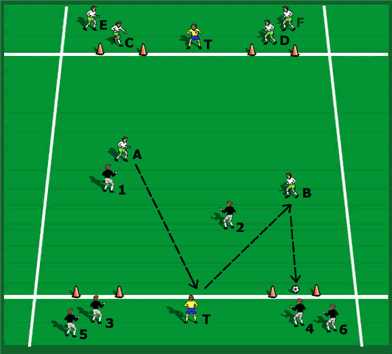
1. A 2 v 2 game going to 4 goals. The team who scores stays on and must quickly defend the 2 new players coming in (one from each goal that the opposition defends).
Instant transition with the same ball that the opponents scored with, here (3) and (4) are positioned to immediately bring the ball the opponents’ may score with out to attack. The other two players (1) and (2) must get off the field ASAP.
The 1st thought of the player on the ball has to be “Can I score?”
The 1st thought of the 1st defender is can I stop them scoring, win possession immediately, and score myself. First team to 10 goals wins, keeping the competitive element.

Coaching Points Attacking:
Quick break and counter attack
Switching the point of attack if another goal is more open
Quick one and two touch passing
Positioning to open up passing lanes and getting between defenders to pass the ball in early
Creating 2 v 1 situations from a 2 v 2 set up and setting up a give and go.
Coaching Points Defending:
Instant pressure as possession changes (transition after scoring going from being an attacker to being a defender)
Regaining possession at the front with a scoring reward
Getting in front of the passing lanes to prevent the quick pass into the goal.
Working together with pressure and support, the support player supporting the first defender, stepping across and covering the passing lane to the second goal and also keeping an eye on the 2nd attacker.
Transition Coaching Points:
Immediately the team that has been in possession of the ball and has scored then they must switch on mentally to become defenders and high pressure the new attacking team to try to win the ball back.
Develop:

Allow back passes to the players in their own goal so they can support the two (or three) attacking players on the ball.
Allow them only one touch so they have to pass it quickly, make a quick decision and players receiving all need to get open to help them.
Vary the number of touches on the ball depending on the age and level of the players and their ability to perform.
Quick transition 3 against 3
Do the same set up but with three goals either side of the field and 3 v 3 games.
It offers more options of passes in the field of play and starts to get the players thinking about triangular support or diamond support if the ball is with a supporting player off the field. A diamond set up.



The book that started it all — now in a clean, modern edition.
Wayne Harrison began teaching scanning and awareness in 1996, long before it became the most talked-about subject in the game. This is his complete Awareness Coaching Method: how we teach young players to scan, think and decide ahead of receiving the ball — to see their options BEFORE the ball arrives.
Inside, across six chapters:
- Chapter One — Introduction to the Book: areas of awareness, one-touch play, and the decision-making thought process of the player about to receive the ball
- Chapter Two — Developing the Link Between Foot and Body Positioning Leading to the Awareness of Options
- Chapter Three — An Introduction to Awareness and Individual Technical Skills
- Chapter Four — The Thought Processes and Physical Actions Involved in Awareness
- Chapter Five — The Awareness Coaching Method and "Themed" Small Sided Games
- Chapter Six — Developing the Awareness Coaching Method Through "Themed" Team Games
With a foreword by Rene Meulensteen, First Team Coach at Manchester United. This is one of the two books José Mourinho wrote back to Wayne about.
Every word is Wayne's own, exactly as he wrote it — only the presentation is new: clean layout, a KEY POINTS box at the end of every clinic (46 boxes, each lifting that clinic's own coaching points word for word), bullet lists, and 300 session diagrams, so a coach can pick it up and use it on the training ground the same day.
379 pages. Instant PDF download after purchase.