
How to develop Angles of support OFF the ball to receive using corridors
You can use this in any size of game. Every player can move anywhere they like from both teams.
Develop:
You can play a straight pass forward thru your own corridor if a player moves into it from another corridor.
If you pass it forward to an existing player in the same corridor then ultimately they receive the ball facing more or less backwards.
If you pass it straight forward to a player entering the same corridor then it is likely they are moving and facing forward as they receive the ball which is what we are essentially trying to create.
To start play unlimited touches, then 3 touches, then 2 touches and then one touch; when it is on to do so.
Always encouraging the players to think and act quickly.
The set up to promote angled support
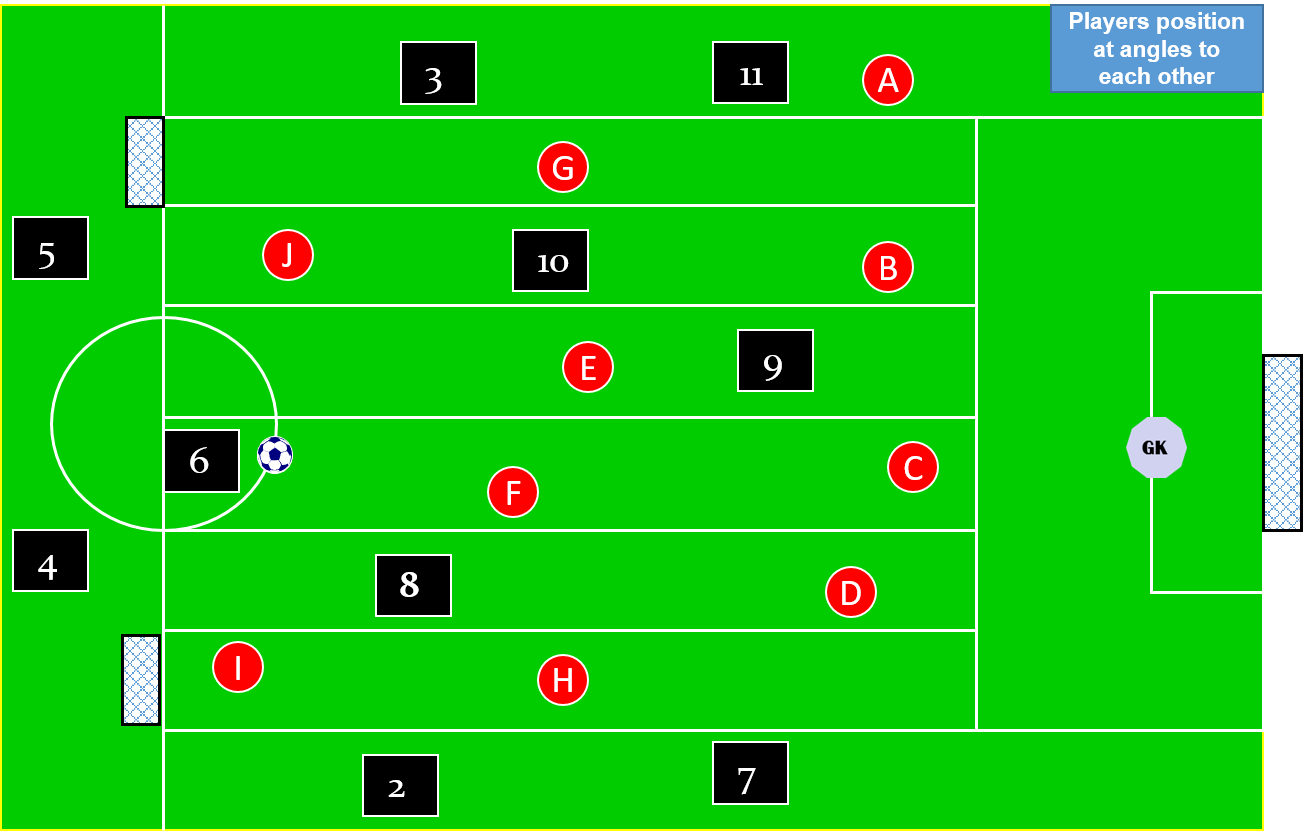
Eight corridors to play in. This teaches players to position to improve their PERIPHERAL VISION. It might only be a case of a couple of yards changing position but it can be vital in terms of retaining the ball. The CONDITION FORCES players to move and position correctly.

(10) cannot receive the pass in the same corridor so has to move into space and into an angled support position. Now (10) receives the ball side on with better PERIPHERAL VISION, forward, back and to the side. (9) then moves off the ball also to create angled support for (10) to pass.
Choices of pass

(10) Is now in a much better position to use awareness instincts to see options. Ultimately (10) should try to position not only side on but ultimately facing forward on their first touch. Here (8) makes a good forward run forming a natural angled position off the ball to receive.
Movements off the ball

This set up also encourages wide players to make movements between zones as they use the coned lines as a guide. Using their own imagination players will begin to interchange between zones and between each other so we get rotational movements.
Rotations and combination plays
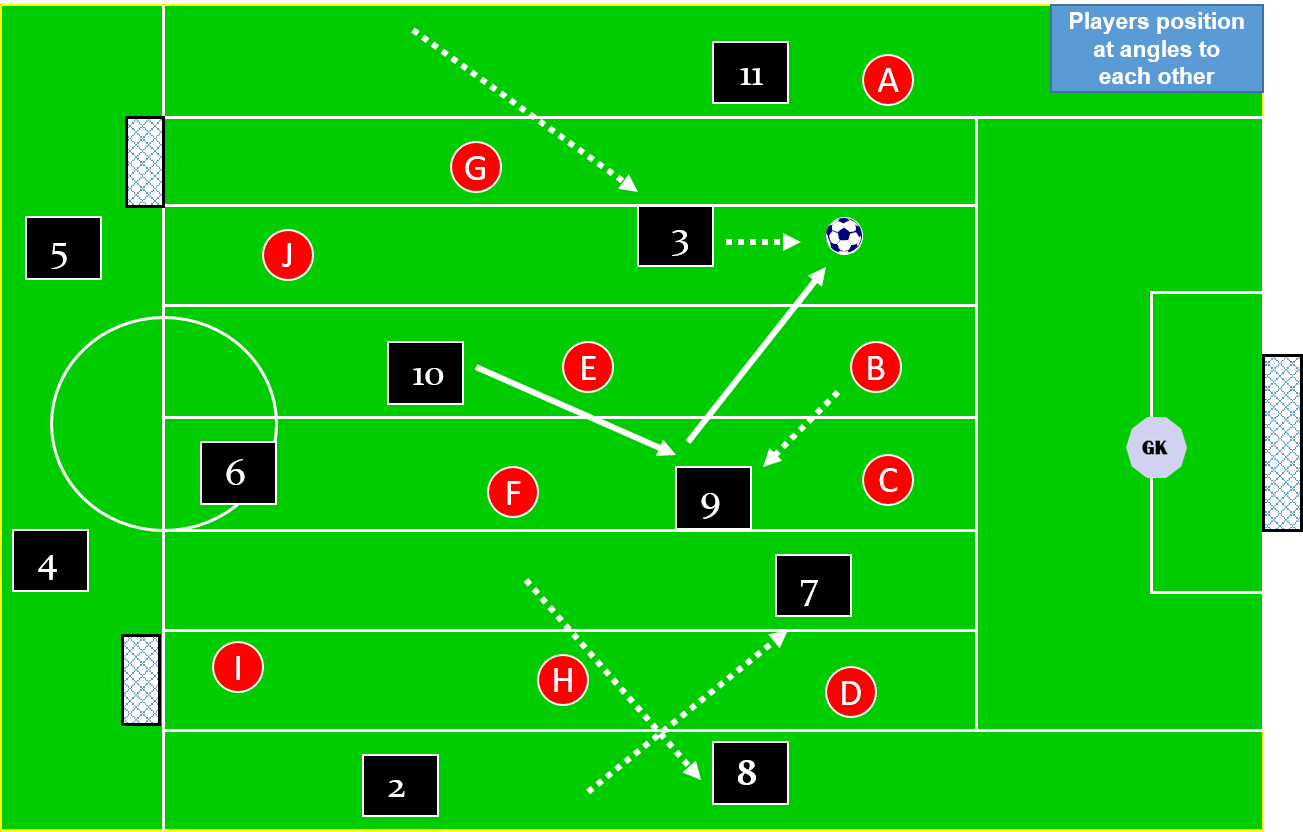
So now we have players dropping back to support and receive (getting free from markers) and moving forward to support and receive; rotations and combinations.
Movement from another corridor into the passing players corridor
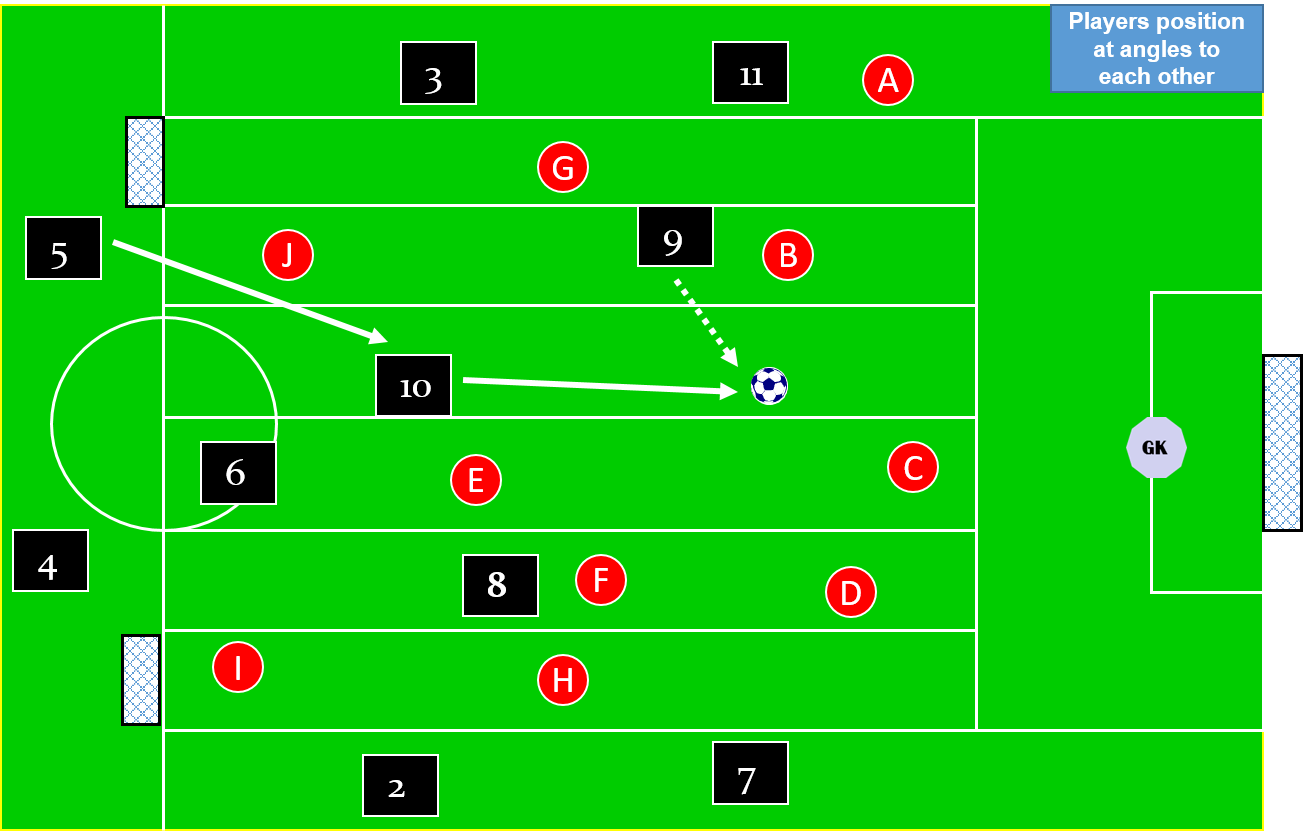
Good timing is essential here where the receiving player (9) times the run to accept the pass facing forward and not breaking stride in doing so therefore the timing and weight of the pass has to be perfect too.


The book that started it all — now in a clean, modern edition.
Wayne Harrison began teaching scanning and awareness in 1996, long before it became the most talked-about subject in the game. This is his complete Awareness Coaching Method: how we teach young players to scan, think and decide ahead of receiving the ball — to see their options BEFORE the ball arrives.
Inside, across six chapters:
- Chapter One — Introduction to the Book: areas of awareness, one-touch play, and the decision-making thought process of the player about to receive the ball
- Chapter Two — Developing the Link Between Foot and Body Positioning Leading to the Awareness of Options
- Chapter Three — An Introduction to Awareness and Individual Technical Skills
- Chapter Four — The Thought Processes and Physical Actions Involved in Awareness
- Chapter Five — The Awareness Coaching Method and "Themed" Small Sided Games
- Chapter Six — Developing the Awareness Coaching Method Through "Themed" Team Games
With a foreword by Rene Meulensteen, First Team Coach at Manchester United. This is one of the two books José Mourinho wrote back to Wayne about.
Every word is Wayne's own, exactly as he wrote it — only the presentation is new: clean layout, a KEY POINTS box at the end of every clinic (46 boxes, each lifting that clinic's own coaching points word for word), bullet lists, and 300 session diagrams, so a coach can pick it up and use it on the training ground the same day.
379 pages. Instant PDF download after purchase.